



Blog
How to Earth a 19-Inch Network Cabinet in Europe: Bonding, EN 50310 and Installation Checklist

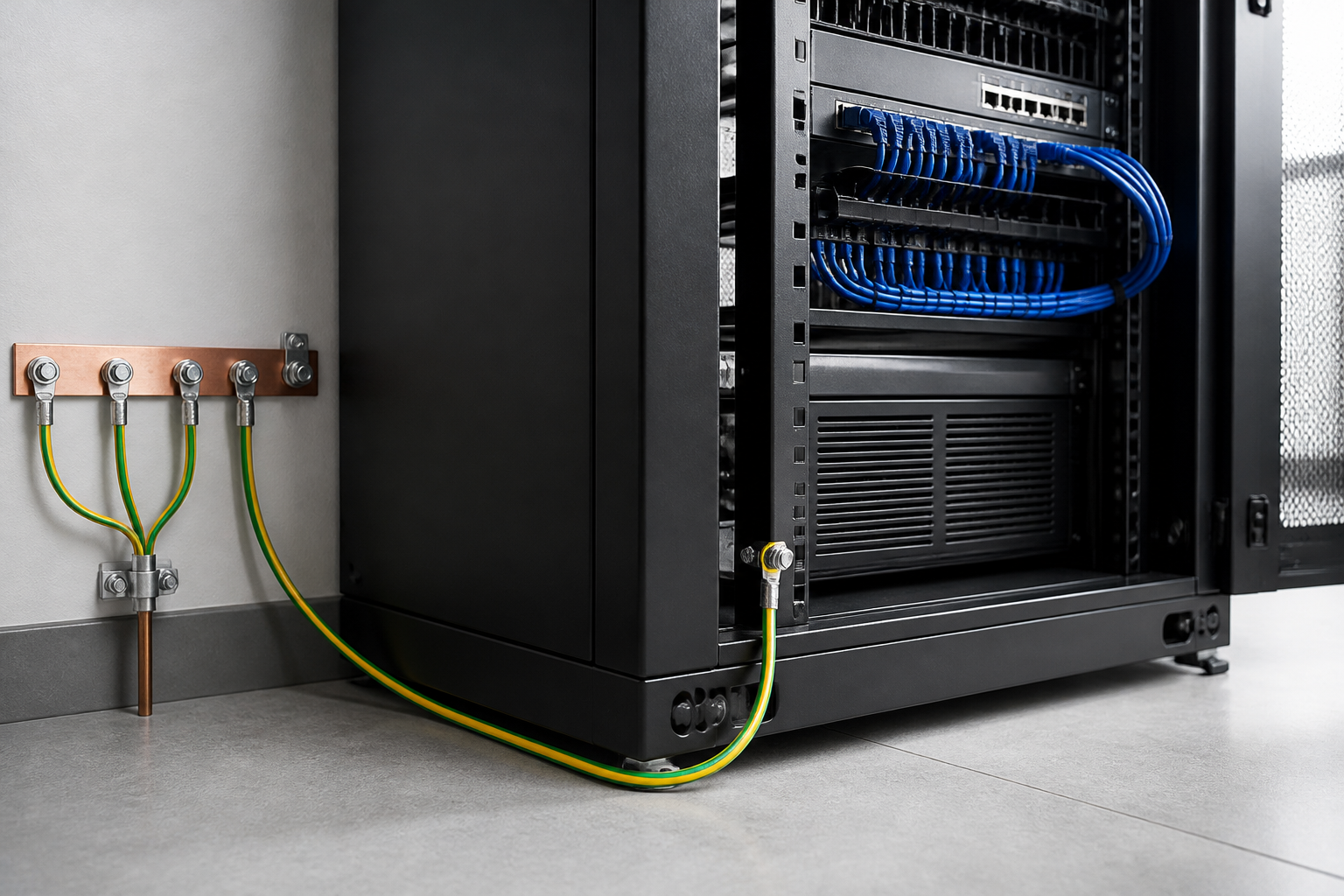
Direct answer: To earth a 19-inch network cabinet in Europe, connect its metal frame, doors, removable panels, mounting rails and associated metallic cablework to the building’s protective bonding system using reliable protective conductors and tested earth connections. Apply the principles of EN 50310 and the applicable national electrical rules, while keeping protective bonding separate from any functional or signal-earth arrangement unless the design specifically permits a connection.
Correct network cabinet earthing and bonding reduces the risk of electric shock, helps protective devices operate during a fault and creates a controlled equipotential environment for switches, patch panels, servers and other information technology equipment. It is not simply a matter of attaching one wire to a convenient screw: the complete cabinet assembly and its connected metallic infrastructure must be considered.
What is the difference between earthing and bonding?
Although the terms are often used interchangeably, they describe different functions:
- Earthing connects an electrical installation or exposed conductive part to earth, normally through the protective conductor system.
- Bonding electrically connects exposed or extraneous conductive parts so that they remain at substantially the same potential during normal operation or a fault.
- Protective bonding is intended to reduce dangerous touch voltages and support automatic disconnection of supply.
- Functional bonding or earthing may be used to control electromagnetic interference, reference signals or equipment performance. It must not be treated as a substitute for protective bonding.
In a network room, the cabinet is usually an exposed conductive part. Cable trays, ladder racks, metallic containment, building steelwork and other conductive services may also require bonding, depending on the installation design and local rules. A qualified electrical designer should determine the complete arrangement.
Why network cabinet earthing and bonding matters
A cabinet can become hazardous if a damaged power cable, failed power supply or loose conductor places voltage on its frame. A low-impedance protective path helps fault current return to the source so that the relevant protective device can disconnect the circuit. Bonding also limits voltage differences between adjacent cabinets and other metalwork that a person could touch simultaneously.
Good bonding supports more than electrical safety. A properly designed equipotential network can help manage electromagnetic interference and reduce the likelihood that transient currents will seek unpredictable paths through data cables. However, bonding is only one part of EMC and surge protection. Cable routing, screening, separation, shielding termination and the building’s lightning protection design also matter.
Safety note: This article is a design and installation guide, not a substitute for the requirements of the electrical installation, the equipment manufacturer or the competent person responsible for verification. Work on fixed electrical systems should be designed, installed and tested by suitably qualified personnel.
EN 50310 and the European approach
EN 50310 addresses the application of equipotential bonding and earthing provisions in information and communication technology networks. It is particularly relevant to data rooms, telecommunications spaces, IT equipment rooms and interconnected ICT installations. The standard should be read alongside the current national implementation, the applicable HD 60364 or national wiring rules, requirements for low-voltage assemblies and any project-specific lightning or EMC standards.
EN 50310 does not remove the need for engineering judgement. The appropriate conductor arrangement, connection points, topology and verification method depend on the building, supply system, cabinet design, equipment and local regulations. For example, a small wall-mounted enclosure in an office may have different requirements from a row of floor-standing cabinets in a data centre.
When reviewing a design, ask these questions:
- Is the cabinet supplied from a circuit that includes a protective conductor?
- Are all accessible metal sections bonded despite paint, hinges or removable fixings?
- Are adjacent cabinets and metallic cable containment included where required?
- Is the bonding route compatible with the building’s main earthing and equipotential bonding system?
- Have the installation’s continuity, disconnection and documentation requirements been defined?
How to earth a 19-inch network cabinet
1. Review the cabinet and installation design
Before drilling or terminating a conductor, inspect the manufacturer’s documentation. Many cabinets include a dedicated earth stud, earth bar or bonding points on the frame, doors and side panels. Confirm whether the cabinet is supplied as a complete bonded assembly or whether installers must fit links between individual parts.
Check the supply arrangement, prospective fault conditions, protective device, conductor sizes, environmental conditions and local inspection requirements. The protective conductor must be sized and installed according to the governing electrical rules; it should not be selected solely because it fits the cabinet’s earth terminal.
2. Connect the cabinet frame to the protective earth system
Use the cabinet’s designated protective bonding point where available. Remove paint, powder coating or other non-conductive finishes only in the controlled contact area specified by the manufacturer. Use the supplied hardware, serrated washers or approved bonding hardware as appropriate, and protect the finished joint against corrosion.
Route the protective bonding conductor securely and avoid sharp bends, abrasion, heat sources and unnecessary loops. Terminations should be mechanically secure, accessible for inspection and protected from accidental loosening. Do not use a painted mounting rail, a hinge pin or a random structural screw as the only earth connection unless it is specifically designed and verified for that purpose.
3. Bond doors, panels and removable sections
Painted hinges and mechanical fixings cannot always be relied upon to provide a durable electrical path. Fit flexible bonding straps between the main frame and each door or removable metal section that can be touched or that forms part of the cabinet’s conductive enclosure. Allow enough flexibility for the door to open fully without pulling the terminal or conductor.
Bond sliding rails, gland plates and other accessible conductive components where the manufacturer’s instructions or the installation design requires it. Keep bonding conductors clear of moving parts and label them where identification will assist future maintenance.
4. Bond racks, cable containment and adjacent cabinets
In a multi-cabinet room, connect cabinets to the intended room or equipment bonding network rather than relying on painted cabinet-to-cabinet contact. Metallic ladder racks, trays, trunking and cable screens may require bonding or controlled termination. Their arrangement should be coordinated with power distribution, telecommunications cabling and any lightning protection system.
Where cabinets are bolted together, a separate inter-cabinet bonding connection may still be appropriate because paint, corrosion or movement can interrupt continuity. Follow the cabinet and containment manufacturer’s instructions and the project earthing design.
5. Integrate powered equipment correctly
Rack-mounted equipment normally receives protective earth through its approved power connection. Use correctly rated power distribution units, appliance couplers and protective conductors. Do not remove the protective earth pin, defeat a protective contact or rely on a data cable shield to earth a device.
Where equipment has a separate protective bonding terminal, connect it as specified by the manufacturer. Avoid creating undocumented parallel paths through signal cables, building services or shield terminations. Any intentional connection between protective earth, functional earth and signal reference must be part of the designed system.
Conductor selection and connection principles
There is no universal conductor size that is correct for every cabinet. The protective conductor and bonding links must comply with the applicable wiring rules, fault-current calculations, disconnection times, mechanical protection requirements and equipment instructions. The design may use a green-and-yellow protective conductor for protective bonding, while functional or EMC connections may have separate identification and requirements.
Use conductors and terminals suitable for the expected fault duty, installation environment and corrosion conditions. Crimped lugs should match the conductor and stud, and the crimp should be made with the correct tool. Terminal screws should be tightened to the manufacturer’s specified torque where one is given. Do not place multiple conductors under a terminal unless the terminal is designed and approved for that arrangement.
Maintain a short, direct and mechanically protected route. In environments with high-frequency interference or lightning-related transients, the inductance of a long, looping conductor can be important; the bonding design should therefore be coordinated with the building’s EMC and surge protection strategy.
Installation checklist for network cabinet earthing and bonding
- Confirm the cabinet manufacturer’s bonding points and assembly instructions.
- Identify the protective earth source and verify that the rack supply includes the required protective conductor.
- Check the applicable national wiring rules, EN 50310 design requirements and project specifications.
- Bond the main cabinet frame using an approved protective bonding connection.
- Fit flexible links to doors, removable side panels and other accessible conductive sections.
- Bond cabinet rows, metallic cable containment and other relevant conductive infrastructure.
- Use correctly sized, identified and mechanically protected conductors.
- Keep protective bonding distinct from functional or signal-earth connections unless deliberately designed otherwise.
- Inspect every termination for correct hardware, tightness, corrosion protection and strain relief.
- Test continuity and verify the installation using the method required by the responsible electrical professional.
- Record conductor routes, connection points, test results, drawings and later modifications.
Testing and verification
Visual inspection should confirm that bonding conductors are present, correctly terminated, undamaged and not obstructed by doors or panels. A continuity test should then verify the intended conductive path between the cabinet sections and the protective earth connection. The test instrument, test current, acceptance criteria and test points should be selected in accordance with the applicable installation rules and project procedures.
Do not assume that a low resistance reading alone proves the installation is safe. Verification should also consider protective device operation, polarity, insulation, supply disconnection requirements, accessible touch voltages and the relationship to other earthing systems. Testing may need to be repeated after cabinet relocation, repainting, replacement of panels or changes to power distribution.
Keep a record of the results. Useful documentation includes cabinet identification, date, tester details, test method, measured values, visual inspection notes, conductor sizes, connection photographs and any corrective actions. Clear records make future maintenance safer and help demonstrate that the installation was checked.
Common mistakes to avoid
- Bonding only the cabinet frame: Doors and removable panels may remain electrically isolated.
- Relying on rack screws: Mechanical attachment does not guarantee a dependable protective earth path through paint or corrosion.
- Using a data cable shield as protective earth: Cable screens are not a replacement for a protective conductor.
- Connecting to a nearby water pipe or random metalwork: Such connections can be unsafe, non-compliant and difficult to verify.
- Ignoring cabinet modifications: New cut-outs, replacement doors and added cable trays can interrupt or alter bonding.
- Mixing earthing systems without a design: Unplanned links can create circulating currents, interference or hazardous potential differences.
- Failing to test after installation: A correctly intended connection can still have a loose lug, damaged conductor or insulated contact surface.
Key takeaways
- Network cabinet earthing and bonding is a complete protective system, not a single wire attached to the rack.
- Bond the frame, doors, removable panels and relevant metallic infrastructure using approved connections.
- Use EN 50310 together with applicable national electrical rules and manufacturer instructions.
- Keep protective bonding separate from functional or signal-earth arrangements unless the design intentionally connects them.
- Have the completed installation inspected, tested and documented by a competent professional.
FAQ
Does every 19-inch network cabinet need an earth connection?
A metal cabinet that contains electrical equipment or can become an accessible conductive part will generally require protective bonding as part of the installation design. The exact arrangement depends on the cabinet, supply system, equipment and applicable national rules. A qualified person should confirm the requirement rather than assuming that a small cabinet is exempt.
Is EN 50310 legally mandatory everywhere in Europe?
EN 50310 is a relevant European standard for ICT equipotential bonding and earthing, but the legal status and implementation can differ by country and project. Always check the current national standards, building regulations, electrical rules and contract requirements that apply to the installation.
Can I use the cabinet mounting bolts as the earth connection?
Do not rely on ordinary mounting bolts unless the cabinet manufacturer specifically designs and verifies them as protective bonding points. Paint, coatings, corrosion and mechanical movement can interrupt electrical continuity. Use the designated earth stud, bar or bonding hardware and verify the completed path.
Should cabinet doors have separate bonding straps?
Yes, a separate flexible bonding strap is commonly used for metal doors and removable panels when they are accessible or form part of the enclosure. The final requirement and connection method should follow the cabinet manufacturer’s instructions and the installation design.
How should a network cabinet earth connection be tested?
Inspect the connections and perform continuity and other required verification tests using the method and acceptance criteria specified by the applicable electrical rules and project procedures. Testing should cover the frame, doors, panels and intended connection to the protective earth system, with results recorded for future maintenance.
{“@context”:”https://schema.org”,”@type”:”FAQPage”,”mainEntity”:[{“@type”:”Question”,”name”:”Does every 19-inch network cabinet need an earth connection?”,”acceptedAnswer”:{“@type”:”Answer”,”text”:”A metal cabinet that contains electrical equipment or can become an accessible conductive part will generally require protective bonding as part of the installation design. The exact arrangement depends on the cabinet, supply system, equipment and applicable national rules. A qualified person should confirm the requirement rather than assuming that a small cabinet is exempt.”}},{“@type”:”Question”,”name”:”Is EN 50310 legally mandatory everywhere in Europe?”,”acceptedAnswer”:{“@type”:”Answer”,”text”:”EN 50310 is a relevant European standard for ICT equipotential bonding and earthing, but the legal status and implementation can differ by country and project. Always check the current national standards, building regulations, electrical rules and contract requirements that apply to the installation.”}},{“@type”:”Question”,”name”:”Can I use the cabinet mounting bolts as the earth connection?”,”acceptedAnswer”:{“@type”:”Answer”,”text”:”Do not rely on ordinary mounting bolts unless the cabinet manufacturer specifically designs and verifies them as protective bonding points. Paint, coatings, corrosion and mechanical movement can interrupt electrical continuity. Use the designated earth stud, bar or bonding hardware and verify the completed path.”}},{“@type”:”Question”,”name”:”Should cabinet doors have separate bonding straps?”,”acceptedAnswer”:{“@type”:”Answer”,”text”:”Yes, a separate flexible bonding strap is commonly used for metal doors and removable panels when they are accessible or form part of the enclosure. The final requirement and connection method should follow the cabinet manufacturer’s instructions and the installation design.”}},{“@type”:”Question”,”name”:”How should a network cabinet earth connection be tested?”,”acceptedAnswer”:{“@type”:”Answer”,”text”:”Inspect the connections and perform continuity and other required verification tests using the method and acceptance criteria specified by the applicable electrical rules and project procedures. Testing should cover the frame, doors, panels and intended connection to the protective earth system, with results recorded for future maintenance.”}}]}
One thought on “How to Earth a 19-Inch Network Cabinet in Europe: Bonding, EN 50310 and Installation Checklist”
Comments are closed.