



Blog
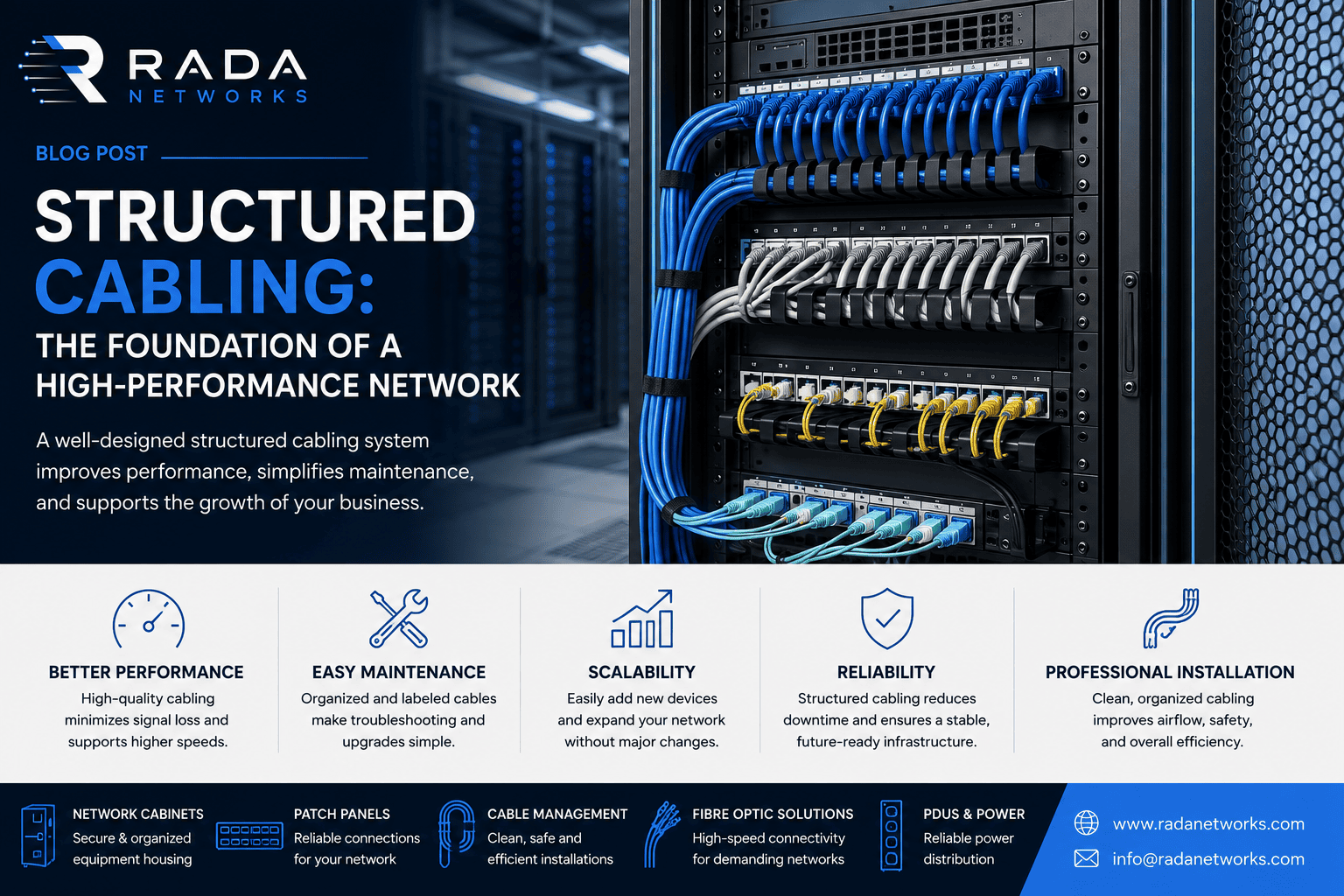
Structured Cabling: The Foundation of a High-Performance Network

Why Structured Cabling Matters
Every reliable network starts with a well-designed structured cabling system. While switches, servers, and firewalls often receive the most attention, the cabling infrastructure is what keeps everything connected and operating efficiently.
A properly planned structured cabling system improves network performance, simplifies maintenance, and provides the flexibility to support future technologies.
Whether you’re building a new office, upgrading a server room, or deploying a complete datacenter, investing in quality cabling pays dividends for years to come.
What Is Structured Cabling?
Structured cabling is a standardized approach to organizing and connecting your network infrastructure.
Rather than installing cables randomly as new equipment is added, structured cabling creates an organized system consisting of:
- Copper Ethernet cabling
- Fibre optic cabling
- Patch panels
- Network cabinets
- Cable management accessories
- Wall outlets and patch cords
This organized approach makes the network easier to maintain, troubleshoot, and expand.
Benefits of Structured Cabling
Improved Network Performance
High-quality cabling minimizes signal loss and supports higher network speeds, ensuring reliable communication between devices.
Easier Maintenance
Clearly labeled and organized cables reduce troubleshooting time and make equipment upgrades much simpler.
Better Scalability
As your business grows, new devices and servers can be added without redesigning your entire network.
Reduced Downtime
Organized infrastructure reduces the risk of accidental cable disconnections and makes fault diagnosis much faster.
Professional Appearance
A clean server cabinet reflects a well-managed IT environment and improves airflow throughout the rack.
Copper or Fibre?
Both technologies have their advantages.
Copper Ethernet
Ideal for:
- Office workstations
- IP phones
- Wireless access points
- Standard network connections
Fibre Optic
Best suited for:
- Datacenters
- Long-distance connections
- High-bandwidth applications
- Backbone infrastructure
- Future-ready networks
Many modern businesses use a combination of both technologies.
Best Practices
To maximize the lifespan and performance of your network:
- Label every cable clearly.
- Use vertical and horizontal cable management.
- Avoid tight cable bends.
- Separate power and data cables where possible.
- Leave spare capacity for future expansion.
- Keep server cabinets clean and well ventilated.
Following these practices improves reliability while reducing maintenance costs.
Why Choose RADA Networks?
RADA Networks provides professional networking and datacenter infrastructure solutions for businesses across Europe.
Our product range includes:
- Structured Cabling Solutions
- Network Cabinets
- Server Cabinets
- Patch Panels
- Fibre Optic Products
- Cable Management Systems
- PDUs
- Datacenter Accessories
We help businesses build organized, scalable, and high-performance IT environments that are ready for future growth.
Conclusion
A strong network starts with a strong foundation. Structured cabling is an investment that improves performance, simplifies maintenance, and supports your organization’s future growth.
Whether you’re installing a small office network or a large enterprise datacenter, a professionally designed cabling system will deliver long-term value.
One thought on “Structured Cabling: The Foundation of a High-Performance Network”